


Cármen Benítez Guerrero
She is Associate Professor (Profesora Contratada Doctora) of Medieval History at the University of Seville. Her main line of research focuses on 14th century Castilian historiography, especially on the study of manuscript traditions, the analysis of the production and reception of texts and the discourse of power. She has carried out research stays in Madrid, Paris and Fribourg (Switzerland), and has taken part in several national and international research projects (Migravit, Ednoa, Aranhis, Enfrentarse al rey, Minores) and in the research groups “El reino de Sevilla en la Baja Edad Media” (University of Seville, HUM214) and “Usos do passado” (Centro de Historia, University of Lisbon).
Cármen Benítez Guerrero
Collaborator


Carmen Blanco
Professor of Italian Philology. University of Cordoba.
Doctorate in Italian Philology from the University of Santiago de Compostela (1992), with a thesis on the Dolce Stil Novo School of Poetry. She has held various management positions at the University of Cordoba, including Director General of Culture and Vice-Rector for Students and Culture. She directs the HUM 872 (Junta de Andalucía) research group “Studies in Italian Philology and Translation” ESFILTRAS.
Her research includes studies on Italian literature of the Middle Ages, and particularly her work on Giovanni Boccaccio.
She is a member of the Hispanic Association of Medieval Literature (AHLM), the Société de Linguistique Romane (SLR), the Society of Spanish Italianists (SEI) and the American Boccaccio Association (ABA). His translations include the Spanish translation of the Filocolo and the Trattatello in laude di Dante, both by Giovanni Boccaccio, and the translation into Galician of an anthology of Antonio Gramsci’s Quaderni dal carcere. She has conducted numerous research stays, mainly in Italy and the United States.
Carmen Blanco


Elisa Borsari
Elisa Borsari es Doctora cum Laude en Literatura Medieval (UAH), mención de Doctor Europeo y Premio Extraordinario de Doctorado (2011). Recibió el Premio de Bibliografía de la Biblioteca Nacional 2009. Es profesora de Literatura Española en la Universidad de Córdoba. Ha sido profesora de lengua, literatura y didáctica en las universidades de La Rioja, Alcalá, Autónoma de Madrid, y Directora de la Cátedra de Español (UR). Tiene una larga trayectoria investigadora: publicación y edición de libros, y artículos en revistas internacionales. También la participado en la preparación de varios manuales de enseñanza de español para extranjeros y otros materiales educativos, así como su traducción al inglés. Participa en varios proyectos I+D+i y de Innovación Docente (DHuMAR, BITAE, BIPROSA). Es especialista en traducciones medievales y Humanidades Digitales. Es secretaria de varias revistas científicas internacionales.
Elisa Borsari
Co-Applicant


Elena Caetano
Elena earned her PhD in 2021 from the University of Birmingham, where she continues to inspire students with her teaching. Her award-winning doctoral study explored discursive representations of the Translatio Imperii in Alfonso X’s Estoria de Espanna, forming the foundation for her upcoming monograph with Tamesis. Currently, Elena’s research also delves into the intriguing influence of maternity on monarchical and imperial succession in medieval Castile. Passionate about Digital Humanities, she has actively participated in pioneering projects such as the Digital Edition of the Estoria de Espanna, and the Transcribe Estoria project, both developed by the University of Birmingham. Elena aims to put this experience to work and contribute to this fascinating project, merging traditional scholarship with digital innovation.
Elena Caetano
Collaborator


María Crego
María Crego is a professor of Arabic language and culture and Arabic-Spanish translation at the Pablo de Olavide University (UPO) in Seville. She received her PhD in Arabic Philology from the University of Granada and is a Specialist in Arabic-Spanish Translation from the Toledo School of Translators. She completed her doctoral thesis at the School of Arabic Studies (CSIC) in Granada.
Her main fields of study are the History and Historiography of al-Andalus and the transmission of knowledge between the Arab-Islamic and Christian worlds. She works specifically on the influence of oriental texts on Spanish historiography and literature, as well as on the medieval genre of Arabic biographical dictionaries, both Andalusian and Maghrebi. She is the author of the monograph Toledo en época Omeya (ss. VIII-IX).
María Crego
Collaborator
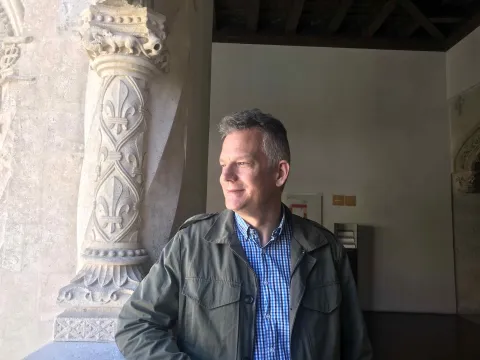
Erik Ekman
Erik Ekman received his Ph. D. from the University of Michigan in 1998 with a thesis on the intersection between narrative and exegesis in the General estoria. He is Professor of Spanish at Oklahoma State University where he teaches Spanish language, literature, and culture. He has held academic positions at Michigan State University, SUNY New Paltz, and Drew University previously. His research focuses on the use of Biblical and Classical sources in the General estoria to create a Latin Christian cultural tradition in Iberia following the Castilian conquests of the 13th century. He also works on fifteenth-century humanist historiography and has written on the Libro de buen amor.
Erik Ekman
Collaborator


Leonardo Funes
He holds a Ph.D. in Literature from the University of Buenos Aires (UBA) and is currently a Senior Researcher at CONICET and Professor Emeritus at the University of Buenos Aires. He is a member of IIBICRIT/SECRIT, a CONICET institute of which he served as Director from 2014 to 2022. He also served as editor-in-chief of the journal INCIPIT during that period. He has led several research projects on medieval Castilian historiographical narrative and has served on the International Advisory Board of the Estoria de Espanna Project, directed by Aengus War (University of Birmingham).
He has published nine books and some 190 articles and notes on medieval Castilian historiography, medieval Castilian epic poetry, didactic and exemplary literature, sentimental fiction and lyrical love songs, and the digital humanities (academic digital publishing).
Leonardo Funes
Collaborator


Marianna Leite
Mariana Leite obtained her PhD in Literature from the University of Porto in 2013, with a thesis on the Portuguese reception of the General Estoria of Alfonso X of Castile. She is concluding a postdoctoral research project at Instituto de Filosofia (U. Porto), funded by the Portuguese Foundation for Science and Technology (FCT), on the presence of Pedro Comestor’s Historia Scholastica in Portugal, including a digital edition of the medieval Portuguese translations of the Latin work. She was a Portuguese language and literature teacher at the École Normale Supérieure de Lyon (2014-2016) and at the Universität Zürich (2020-2021); she also taught Medieval Spanish Literature at the University of Porto with Professor José Carlos Miranda (2017-2019).
Her research focuses on studying and transcribing medieval texts, with a particular interest in universal historiography. In recent years, she has dedicated her investigation to the presence of sources for universal chronicles (especially Biblical and Classical) in medieval Portuguese culture.
Marianna Leite
Co-Applicant and Team Coordinator
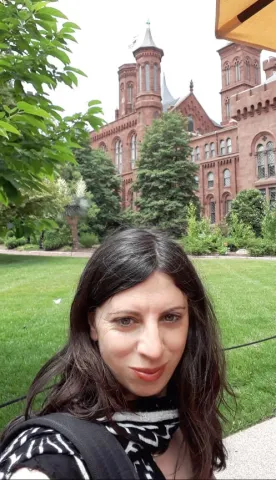
Joana Matos Gomes
Joana Matos Gomes has been a contracted researcher at the Institute of Philosophy of the University of Porto since 2019. Her work has primarily focused on the field of Iberian medieval historiography (12th-14th centuries), investigating the role and representation of women in historiographical texts, historiographical translation in the medieval context, and textual criticism, areas in which she has published various research works. She has participated in several national and international research projects dedicated to these themes. More recently, she has been exploring contemporary revisitations of the Middle Ages, particularly in Central and Eastern European cinema and Portuguese literature. Currently, she is the Principal Investigator of a research project at the Institute of Philosophy entitled “Sensory Vision, Spiritual Vision: A Study of Their Expressions in 15th-Century Portuguese Literature.”
Joana Matos Gomes
Collaborator


Emre Ozmen
She is currently working at the Department of Philological and Literary Studies at the University of Cordoba with the Margarita Salas postdoctoral contract. She holds a degree in Spanish Language and Literature from Ankara University and a master’s degree in the same field. In 2016 she obtained her PhD degree in Turkey from Ankara University, with a thesis on the female picaresque figure in the Baroque novel. In 2022 he obtained a PhD degree from the University of Cordoba with a thesis on María de Zayas and her position in the literary field of the time.
Has participated in several research projects on Spanish literature and digital humanities. Some of them are: Sujeto e institución literaria en la Edad Moderna, Del sujeto a la institución literaria en la edad moderna: procesos de mediación and Voces y silencios: discursos culturales en la edad moderna. Her work focuses on the formation of the literary canon and the image of women writers in it.
Emre Ozmen
Collaborator


Gabriel Passabì
After reading History at the University of Siena (and Medieval History at King’s College London, I obtained my doctorate from the University of Cambridge in 2021. Since then, I held postdoctoral positions at the Trierer Kolleg für Mittelalter und Frühe Neuzeit at the University of Trier (Germany) and the Pontifical Institute of Mediaeval Studies in Toronto (Canada). Currently, I am Claudio Leonardi Research Fellow for SISMEL (Florence) and Visiting Scholar at Sidney Sussex College, Cambridge. My research focuses on the writing of universal history in the Anglo-Norman worlds during the twelfth and thirteenth centuries and its relationship with political culture and power. My work has appeared in Revue Bénédictine, Tabularia, Anglo-Norman Studies and Cîteaux.
Gabriel Passabì
Collaborator


Javier Rubiera
<Missing bio>
Javier Rubiera
Collaborator