


Bárbara Boloix-Gallardo
Bárbara Boloix-Gallardo is Senior Lecturer of Arabic and Islamic Studies at the University of Granada (Spain). She conducted her post-doctoral research period at Washington University in St. Louis (Missouri, USA), where she taught courses on History of al-Andalus. Her main area of specialization is the History, Society, and Culture of al-Andalus and the Maghreb, in particular the study of the Nasrid Kingdom of Granada (13th–15th centuries) and the study of both Andalusi and Maghribian women. She has directed two National Research Projects on “Nasrid
and Merinid Women in the Islamic Societies of the Medieval Mediterranean
(13th–15th centuries): Power, Identity, and Social Dynamics” (HAR2017-88117-P) and “From Nasrid to Morisco Women: Daily Lives, Influences, and socio-cultural (dis)continuities in the inner-history of the peninsular context (13th–16th centuries)”, respectively.
She has delivered a number of papers at international conferences and prepared several publications on these topics. Among them are the book “Las Sultanas de la Alhambra. Las grandes desconocidas del Reino Nazarí de Granada (siglos XIII–XV) (2013)” and the edition of the monography “A Companion to Islamic Granada” (Brill, 2021).
She is currently a Member of the University Institute of Research on Women and Gender at the University of Granada and Vice-Secretary of Cultural and Institiutional Cooperation at the Euro-Arab Fundation in Granada.
Bárbara Boloix-Gallardo
Co-Applicant


Francisco Gago Jover
Francisco Gago-Jover is Professor of Spanish at the College of the Holy Cross (Worcester, Massachusetts). He studied at the University of Valladolid, receiving a BA in Geography and History in 1985. Later he pursued doctoral studies in Linguistics and Spanish Romance Philology at the University of Wisconsin-Madison. His doctoral thesis was a study of the Castilian military lexicon in the Middle Ages. He is the author of two dictionaries of military terminology, an edition of the Spanish version of Arte de bien morir, various articles on lexicography, creation of linguistic corpus and stylometrics, and numerous paleographic transcriptions of Spanish medieval texts.
He has taught doctoral courses at different universities in the United States (University of Massachusetts-Amherst and Boston University) and in Spain (Universidad de León, Universidad de Valladolid and Universitat de les Illes Balears), and has offered numerous workshops on different applications of the digital humanities (paleography and automatic transcription of texts, stylometry, design of linguistic corpus, etc.).
As Director of Digital Projects at the Hispanic Seminary of Medieval Studies, he is in charge of the Digital Library of Old Spanish Texts, the Lexical Studies of Medieval Textsbibliography, and the Old Spanish Textual Archive, a linguistic corpus, lemmatized and morphologically labeled, of nearly 35,000,000 words, of medieval texts written in Castilian, Asturian, Leonese, Navarro-Aragonese and Aragonese.
Francisco Gago Jover
Co-Director (Research) and Team Coordinator


Fernando García Andreva
Fernadno García Andreva is doctor in Hispanic Philology from the University of La Rioja, with training in Historiographic Sciences and Techniques from the University of Valladolid and in Digital Humanities from the UNED. He has published the edition and linguistic study of some medieval documentary collections of La Rioja. He has also participated in several national projects, some on Emilian glosses and glossaries and others related to the General e Grand Estoria de Alfonso X. Another of his lines of research has been on medieval Hispanic Bibles, with special attention to the Arragel Bible. Since 2004, he is professor at the University of La Rioja in the Spanish Language Department.
Fernando García Andreva
Co-Applicant
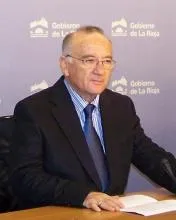
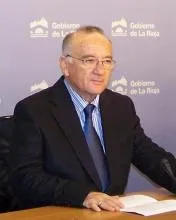
Claudio García Turza
Professor in History of the Spanish Language at the University of La Rioja in Spain and the Director of the Instituto Orígenes del Español (Origins of the Spanish Language Institute) at the Centro Internacional de Investigación de la Lengua Española. He is a member of both the Royal Spanish Academy of Language and the Royal Spanish Academy of History.
Claudio García Turza is one of the most renowned scholars worldwide in the study of the history of the origins of Romance languages. He has combined his teaching with intense research work covering almost all areas of Hispanic linguistics. His research focuses on Medieval Studies, Spanish Language, Spanish Dialectology and Historical Linguistics of the Spanish Language.
Claudio García Turza
Collaborator
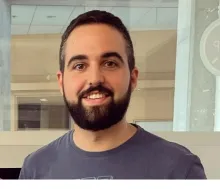
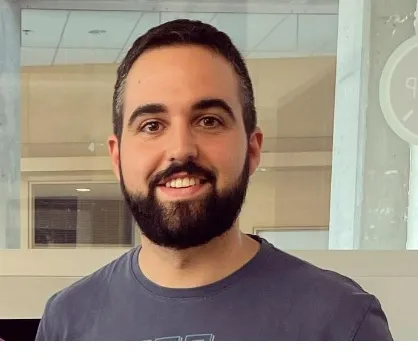
Miguel Las Heras Calvo
Miguel Las Heras is a postdoctoral researcher with a PhD from University of La Rioja (Spain). His research and academic interest are mainly focused on the study of punctuation in Alfonso X the Wise’s historiographical production, as well as on the use of Digital Humanities in his research.
Miguel Las Heras Calvo
Co-Applicant


Mónica Martins Guedes
Degree in Portuguese and Spanish Languages, Literatures and Cultures from the University of Aveiro (2015). Postgraduate studies (Master’s Degree in Portuguese Foreign Language) at the Faculty of Arts, University of Porto (2017). In 2019 she was a lecturer in Portuguese language at the National Autonomous University of Mexico and from 2021 to 2023 she has been a visiting professor at the University of Granada, where she has taught courses in Portuguese linguistics and literature. She is currently working on her doctoral thesis on historical contrastive grammar in the PhD programme Languages, Texts and Contexts at the University of Granada. Her research interests focus on Portuguese-Spanish historical contrastive grammar and the history of the grammar of both languages.
Mónica Martins Guedes
Collaborator


Emre Ozmen
She is currently working at the Department of Philological and Literary Studies at the University of Cordoba with the Margarita Salas postdoctoral contract. She holds a degree in Spanish Language and Literature from Ankara University and a master’s degree in the same field. In 2016 she obtained her PhD degree in Turkey from Ankara University, with a thesis on the female picaresque figure in the Baroque novel. In 2022 he obtained a PhD degree from the University of Cordoba with a thesis on María de Zayas and her position in the literary field of the time.
Has participated in several research projects on Spanish literature and digital humanities. Some of them are: Sujeto e institución literaria en la Edad Moderna, Del sujeto a la institución literaria en la edad moderna: procesos de mediación and Voces y silencios: discursos culturales en la edad moderna. Her work focuses on the formation of the literary canon and the image of women writers in it.
Emre Ozmen
Collaborator


Enrique Pato
Enrique Pato (UdeM) is Professor in the Department of World Literatures and Languages, and a specialist in historical grammar of Spanish. He will participate in the linguistic commentary of the text, and he will have a major role in coordinating our project with other philological projects in Europe, through his extensive net of contacts and previous collaborators in the field. He will also be in charge of putting together a first French translation sub-team, alongside students from the Departments of World Literatures and Languages and Linguistics and Translation at UdeM.
Enrique Pato
Co-Applicant and Team Coordinator

Nicolás Solari Jarque
Degree in Classical Philology (2017) at the Complutense University of Madrid, Master in Written Historical Heritage (2018) at the Complutense University of Madrid and PhD in Latin Linguistics (2022) at the University of Alcalá.
During the period of his doctoral training he received a grant from the Hugo Schuchardt Foundation of the University of Graz (Austria) and published a large corpus of the Preposition + Adjective adverbial patterns on which his research was focused within the research international project The Third Way, of which he was part as a pre-doctoral researcher.
His line of research focuses on Latin adverbs, especially adverbial formations of preposition and adjective, approaching this topic from diachronic, morphological and semantic perspectives.
Nicolás Solari Jarque
Collaborator


Fernando Tejero-Herrero
Fernando Tejedo-Herrero (PhD)is Professor in the Department of Spanish and Portuguese at the University of Wisconsin-Madison. He works primarily in the fields of (socio)historical linguistics, dialectology, and lexicography and lexicology. His research combines corpus-based analyses of historical data with socio-historical approaches to language variation and change. His current interests lie in the development of Spanish as a standard language. In particular, his research focuses on standardization practices as reflected in the transmission of texts from manuscript to print, questions about the formation and transmission of specialized vocabulary, and the development of language ideologies that promote or reject linguistic variants as part of a (supra)norm.
He is the co-author, with Francisco Gago-Jover, of Diccionario militar de Raimundo Sanz. Edición y estudio (Institución Fernando el Católico, 2007); he is co-editor, with Sandro Sessarego, of Spanish language and Sociolinguistic Analysis (John Benjamins, 2016) and co-editor, with Gabriel Rei-Doval, of Lusophone, Galician, and Hispanic Linguistics: Bridging Frames and Traditions (Routledge, 2019).
Fernando Tejero-Herrero
Collaborator


Bojana Tulimirovic
Bojana Tulimirovic Joksimovic (Belgrade, 1987) holds a PhD in Spanish Linguistics from the University of Granada and is accredited as assistant professor by ANECA and ACCUA. She holds a degree in Hispanic Philology from the University of Belgrade and Master’s Degree in Advanced Studies in Spanish Language as well as Master’s Degree in Foreign Language Teaching, both from the University of Granada. She is currently working as an Assistant Professor at the Centro de Magisterio La Inmaculada, affiliated with the University of Granada, where she also holds the position of Coordinator of International Relations. During the academic year 2021-2022 she did a research stay at the University of Verona and has been a visiting professor at the University of Belgrade, University of Kragujevac, University of Bergen and University of Iceland, among others. Her main areas of research are Spanish pragmatics and phraseology, as well as sociolinguistics (she is part of the research team of the PRESEEA-Granada project) and the didactics and acquisition of foreign languages, mainly English. She has published in high-impact journals such as Pragmalingüística, Textos en proceso, Tonos digital, Revista de Investigación lingüística, Revista de lengua para fines específicos, etc. She is a member of the research group HUM170: Ibero-Romance Studies (Contrastive Linguistics and Comparative Literature).
Bojana Tulimirovic
Collaborator


Leonor Zozaya Montes
Leonor Zozaya-Montes holds a degree (1993/98) and a PhD in History from the Complutense University of Madrid (UCM, 2008), where she was Professor of Historiographical Sciences and Techniques (2006/11). She is currently a lecturer at the University of Las Palmas de Gran Canaria (Spain). She was a scholarship holder at UCM (1997/98) and at the Institute of History of the Consejo Superior de Investigaciones Científicas (CSIC, 1999-2006). She did a research period at the École des Hautes Études en Sciences Sociales in Paris for a full year (2002/03). She was a FormArte grantee at the Spanish National Library Archive (Madrid, 2012/13). Between 2014 and 2019 she was an FCT post-doctoral fellow at the CHSC of the University of Coimbra. She is the author of about fifty scientific publications. She is principal investigator of the Project on “Archivos, documentos y memoria de la Época Medieval a la Contemporánea”
Contact: leonorzozaya@gmail.com
Leonor Zozaya Montes
Collaborator