




Maite Caro
Graduated in Geography and History from Pablo de Olavide University in Seville. She subsequently completed a Master's Degree in Egyptology and Oriental Studies at the University of Pisa, where she studied Middle Eastern languages such as Egyptian, Akkadian, Ugaritic, and Syriac.
Contact: mcaro2999@gmail.com
Maite Caro
Graduate Student
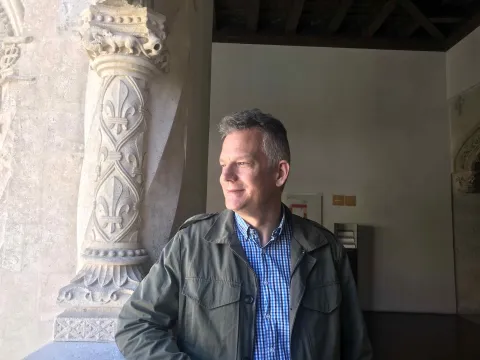
Erik Ekman
Erik Ekman received his Ph. D. from the University of Michigan in 1998 with a thesis on the intersection between narrative and exegesis in the General estoria. He is Professor of Spanish at Oklahoma State University where he teaches Spanish language, literature, and culture. He has held academic positions at Michigan State University, SUNY New Paltz, and Drew University previously. His research focuses on the use of Biblical and Classical sources in the General estoria to create a Latin Christian cultural tradition in Iberia following the Castilian conquests of the 13th century. He also works on fifteenth-century humanist historiography and has written on the Libro de buen amor.
Erik Ekman
Collaborator


Giancarlo Fantechi
Graduated in Political Science (University of Florence), Theology (McGill University, Montreal) and Hispanic Studies (Bishop’s University, Sherbrooke QC), holds an MA and a PhD in Hispanic Studies from the University of Montreal. His area of research is medieval biblical translations in Castilian, particularly the Escorial E6 and E8 versions (13th century), which were the subject of his doctoral dissertation. He has published several articles on the two manuscripts and their glosses in the journals Estudios Bíblicos and Rivista di Cultura Classica e Medievale. He is currently professor of Italian language at the University of Montreal and of Spanish language at Bishop’s University (Sherbrooke, Quebec).
Giancarlo Fantechi
Co-Applicant
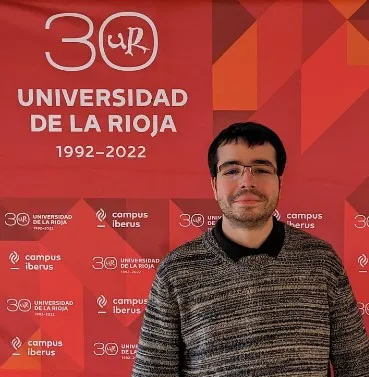
José Santos Hernández Justo
José Santos Hernández Justo is a predoctoral researcher in Hispanic Philology at the University of La Rioja in Spain. Currently, he is working on his doctoral thesis, which focuses on the study of intertextuality in Genesis in the General estoria of Alfonso X The Wise. To accomplish this, he is employing discourse analysis tools, representing an innovative approach to the Alphonsine text.
Another of his lines of research has been graphematics. Among his achievements in this field is the article “Approach to the study of the graphemes of the nasal palatal consonant in the Navarrese romance of the 13th century”, derived from his Bachelor’s thesis. He also has collaborated with the Royal Spanish Academy in the development of the New Historical Dictionary of the Spanish Language.
José Santos Hernández Justo
Graduate Student


Anne Letourneau
Holds a PhD in Religious Studies (Biblical Studies) with a concentration in Feminist Studies from the Université du Québec à Montréal. From 2015 to 2017, she conducted postdoctoral research in the Department of Religion at Temple University (Philadelphia). Her specialty is the exegesis of the Hebrew Bible. In her research and teaching, she is particularly interested in the religious, literary and historical meanings of biblical texts, as well as the history of their effects, particularly on women and other marginalized groups.
Anne Letourneau
Collaborator


David Navarro
David Navarro (Texas State) is an Associate Professor in the Department of World Languages and Literatures and brings to this project expertise in medieval Iberian literature and historiography, biblical exegesis, Jewish–Christian relations in the Iberian kingdoms, and Judeo-Spanish. He will contribute with the identification of non-cited Hebrew sources in the GE, especially those of Biblical origin that might shed light on the different Jewish handwritings involved in the compilation of the text.
David Navarro
Co-Applicant


Francisco Peña Fernández
Professor at the Department of Languages and World Literatures at the University of British Columbia and Coordinator of the World Literatures Program. He earned his BA in Ancient and Medieval History at the Universidad de Sevilla (Spain) his PhD in Hebrew Philology and Religious Studies at the Universidad Complutense de Madrid (Spain) and his PhD in Medieval Spanish Literature at the University of California, Davis.
His research is wide-ranging and interdisciplinary in nature. It spans Medieval Studies, Literary and Biblical Studies, and Religious Studies. His research engage in a synthesizing analysis of literature, history, and religion so as to develop new understandings of Medieval Iberian cultures. It currently focuses on the connections between Christian and Jewish exegetical traditions, examining Jewish writers that worked on Biblical texts, to piece together the connections between historical religious knowledge and the communities of learned people that created central texts of the period. He has contributed to a rich debate on the role of Judaism in Christian thought in Medieval Spain, which has largely divided American and Spanish medievalists.
Francisco Peña Fernández
Co-Director (Student training) and P. I. and Team Coordinator


F. Javier Pueyo Mena
F. Javier Pueyo Mena is a tenured researcher at the Spanish National Research Council (CSIC). He earned his MA in Hispanic Linguistics at the University of Southern California and his Ph.D. in Hispanic Philology at the University of Deusto (Spain). He is currently living in the United States, where he has been appointed as a research associate at the Hispanic Seminary of Medieval Studies.
His main fields of research are Judeo-Spanish and Medieval Spanish, in particular Jewish Biblical translations into Ladino. He is also involved in several projects in the area of the Digital Humanities, mainly developing Historical Linguistic Corpora and Natural Language Processing tools applied to Judeo- Spanish and Old Spanish. He has published several books and articles, which include the editions of two medieval Jewish Biblical translations: mss. RAH 87 and BNE 10288, and two Ladino Biblical translations: Abraham Asa’s Ladino translation of the book of Ruth and the book of Genesis from the Ladino Biblical glossary Sefer Ḥesheq Shelomoh. He is currently co-authoring the annotated edition of the 15th century manuscript containing the Arragel Bible and Commentary.
Contact: test@email.com
F. Javier Pueyo Mena
Co-Applicant


Salomón Verhelst
Salomón Verhelst Montenegro is a philosopher at Javeriana University, holds a master's degree in philosophy from the National University of Colombia, and is a candidate for a master's degree in digital humanities at the University of British Columbia (UBC). He is a university professor, writer, and poet, with published books of poetry and essays, and has participated in digital humanities and audiovisual projects.
Salomón Verhelst
Graduate Student


Rebekah Welton
Teachs in the Theology and Religion department at Exeter on modules relating to Judaism and the Hebrew Bible. My module ‘God, Food and Alcohol in Israelite and Jewish Cultures’ draws from my PhD research on consumption of food and alcohol in the Hebrew Bible. I also teach ‘The Bible: Past and Present’ and am a seminar tutor for the Liberal Arts core module ‘Being Human in the Modern World.’
She also supports postgraduate students with projects on biblical studies and support the teaching of ‘Research Methods in Theology’, ‘Research Proposals in Theology’, and ‘Approaches to Biblical Studies’.
Rebekah Welton
Collaborator