


Juan Ballesteros
Juan R. Ballesteros Sánchez (UPO) is a Professor of Ancient History in the Department of Geography, History and Philosophy and a specialist in mediaeval and modern historiography on Antiquity. His studies range from classical historiography to the humanistic approach to Antiquity. Recently, he is the author of a critical edition of Iustus Lipsius’ Admiranda (1598). He has also studied the tradition of classical authors such as Aelius Aristides, Martial, and the Historia Augusta in monographic publications. Now he is interested in detecting and studying the ways of quoting, reading and adapting Greek and Latin sources. His goal is to present the General Estoria as a neoclassical experience and the classical elements recovered and employed by the General Estoria team in fields such as Geography, Astronomy, Ethnography or Linguistics.
Juan Ballesteros
Co-Applicant


Luis Cabeza Delgado
Luis Cabeza Delgado holds a degree in Translation and Interpreting (English) and a degree in Humanities from the Pablo de Olavide University in Seville. He completed a Master’s degree in Advanced Studies and Research in History at the University of Salamanca, where he was awarded the Extraordinary End-of-Master’s Prize in recognition of his academic excellence. He is currently the recipient of a University Teaching Training Fellowship (FPU) granted by the Spanish Ministry of Science, Innovation and Universities. He is enrolled in the doctoral programme in History and Humanistic Studies at the Pablo de Olavide University in Seville. His doctoral thesis focuses on power relations within the chapter of Seville Cathedral during the Late Middle Ages. He has published work in Medievalismo: Revista de la Sociedad Española de Estudios Medievales and is co-editor of the ongoing publication Reglas de hermandades y cofradías andaluzas: siglos XVII y XVIII. In addition, he has participated in conferences and symposia held at institutions such as the Universidad del Salvador (Buenos Aires) and the University of Lleida, presenting his research on Church history from various perspectives. He has also undertaken an international research stay at Ruprecht-Karls-Universität Heidelberg, Germany. At present, he serves as editor-in-chief of the academic journal Bajo Guadalquivir y Mundos Atlánticos, published by Pablo de Olavide University. He is a member of the Centro de Estudios e Investigación de la Religiosidad Andaluza (HUM-686).
Luis Cabeza Delgado
Graduate Student


Maite Caro
Graduated in Geography and History from Pablo de Olavide University in Seville. She subsequently completed a Master's Degree in Egyptology and Oriental Studies at the University of Pisa, where she studied Middle Eastern languages such as Egyptian, Akkadian, Ugaritic, and Syriac.
Contact: mcaro2999@gmail.com
Maite Caro
Graduate Student


Alejandro Colete
Lecturer at CIEE (Seville) of Polisitics and Society in Contemporary Arab World. PhD in history of Islamic Science and Philosophy (University of Seville, 2021). Master’s Degree in Narrative and Script-writing (2017), and BA in Philosophy (2015). Devoted polyglot (English, German, Arabic, Turkish, Latin, Hebrew, Greek), translator for private business, editor, draughtsman, content creator and film-maker. His doctoral dissertation dealt with the legacy of Late Antiquity in Islamic Science and Philosophy, topic I adressed through the framework of Wittenstein’s philosophy of language. My research focused in the conception of knowledge and its evolution from Antiquity to Late Antiquity. I worked as much as possible with the documents in their original languages (Ancient Greek, Latin, Arabic, Syriac), working with grammar books as much as with the text themselves. His methodolgical approach required thorough knowledge of the grammar of both semitic and indo-european languages, in order to compare exactaly how ideas or concepts were being put into words.
Research interests
Late Antiquity, History of Science and Philosophy, Turkic Studies, Contemporary Islamic World, Middle East, Literature, Antiquity, Polyglotism, The Silk Road, Political Philosophy, Art History, Indo-European Studies, Modern History, Language
Alejandro Colete
Collaborator
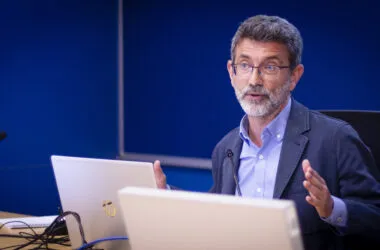
Juan Manuel Cortés Copete
Juan Manuel Cortés Copete is Professor of Ancient History, Universidad Pablo de Olavide, Sevilla. He is an expert in Roman History and Greek Literature in the Roman Empire, with a particular emphasis on the Second Sophistic. He is also interested in the Jews under Roman rule. His most recent research has to do with the unity and diversity in the Roman Empire, and with the formation of a new social identity for the Empire.
Juan Manuel Cortés Copete
Collaborator


María Crego
María Crego is a professor of Arabic language and culture and Arabic-Spanish translation at the Pablo de Olavide University (UPO) in Seville. She received her PhD in Arabic Philology from the University of Granada and is a Specialist in Arabic-Spanish Translation from the Toledo School of Translators. She completed her doctoral thesis at the School of Arabic Studies (CSIC) in Granada.
Her main fields of study are the History and Historiography of al-Andalus and the transmission of knowledge between the Arab-Islamic and Christian worlds. She works specifically on the influence of oriental texts on Spanish historiography and literature, as well as on the medieval genre of Arabic biographical dictionaries, both Andalusian and Maghrebi. She is the author of the monograph Toledo en época Omeya (ss. VIII-IX).
María Crego
Collaborator


Antonio J. López
Doctor in History from the University of Oviedo (Spain) in 1988 with the work “La cancillería de Alfonso X a través de las fuentes legales y la realidad documental”. Associate Professor of the University Pablo de Olavide. Member of the Department of Geography, History and Philosophy and Head of the Area of Sciences and Historiographic Techniques of the Faculty of Humanities. Member of several research groups related to notarial documentation from the thirteenth to the eighteenth centuries. Specialist in the chancellery of Alfonso X of which he has published about fifteen works among them: “La tradición documental en la cancillería de Alfonso X” (1993); “Registros y registradores en la cancillería de Alfonso X” (1995); “La génesis documental en la cancillería real alfonsí” (2016); “Los scriptoria del siglo XIII en la corona de Castilla” (2017); “El uso del sello de oro en la cancillería de Alfonso X” (2021); “Documentos en pergamino de panno en la cancillería de Alfonso X” (2023).
Antonio J. López
Collaborator

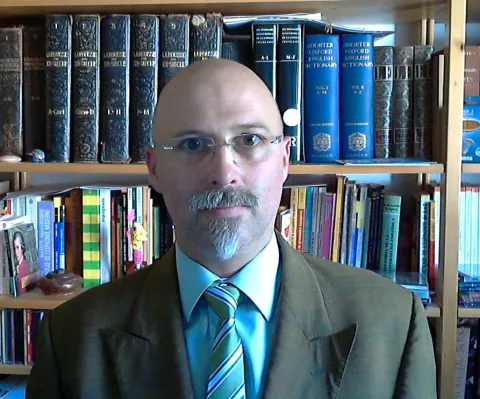
José Manuel Luque Romero
José Manuel Luque Romero graduated at the University of Seville where he also studied as a postgraduate level at the University of Seville; he then completed his second master’s degree at the University of Lyons II on the figure of Cléon. After several years of research on the political discourses in the works of Herodian and Cassius Dio, he became a history and geography teacher working for the French Department of Education, where he still works today. Since 2022, he has been preparing a bilingual edition of Eusebius’ Chronicon as a PhD under the supervision of Juan Manuel Cortés Copete.
José Manuel Luque Romero
Graduate Student


Jose M. Miura
José María Miura holds a Ph.D. in History from the University of Seville. He taught at the Universities of Seville (1985-1993) and Huelva (1993-1998) before joining the Pablo de Olavide University as an associate professor in 1998. He has held various academic positions and has collaborated as director and lecturer in several postgraduate courses in Spain, Ecuador, France and Colombia, in addition to his university. He is co-director of the Master in Latin American History, Indigenous Worlds at the Universidad Pablo de Olavide.
He is the director of the Centro de Estudios e Investigación de la Religiosidad Andaluza (CEIRA), within the Andalusian Research Plan, (HUM-686), and collaborates in various research projects, both regional, national and international. He has published several books and is the author of more than fifty articles and scientific contributions related to the Andalusian reality between the fifteenth and sixteenth centuries and its Atlantic relations. Among them are those related to the mendicant orders, the confraternities or the female religiosity (the beatas), the social organization of space and the settlement systems.
Jose M. Miura
Collaborator
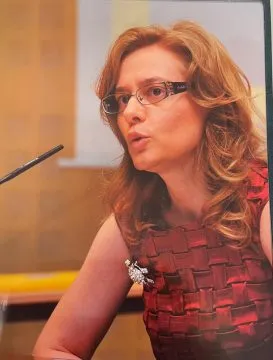
Silvia Pérez González
Doctor in History, Universidad Pablo de Olavide (Spain), Doctor Dissertation on Society and Church in Seville at the End of the Middle Ages, Universidad Pablo de Olavide, 2001. Cureently Professor at the Department of Geography, History and Philosophy, Area of Medieval History, and Director of the Seminary of Gender Studies. University of Pablo de Olavide. Member of several projects, Construir la Ciudad (Universidad de León), Monastic Landscapes (Universidad de Barcelona) and Cities in the Kingdom of Castile (Universidad Complutense) and Sorores (Écoles Française de Rome). Recent publications include Mujeres y Hermandades. La feminización del mundo cofrade(2022), “La religiosidad de los testamentos del fondo Ilustrísima Señora Doña Pilar Ponce de León y de las Heras (siglos XV-XVI)” (2022)
Silvia Pérez González
Co-Applicant and Team Coordinator